Bioclimatic pergola on the terrace: when it is considered a permanent structure and can obstruct the view
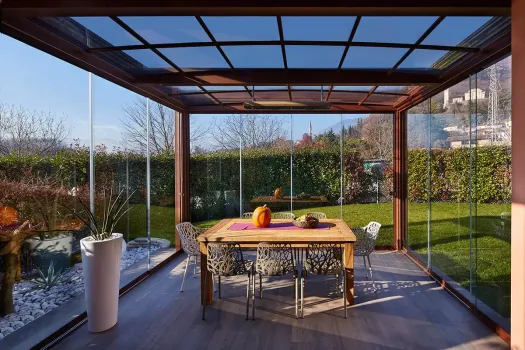
Bioclimatic pergola on the terrace: when it qualifies as a permanent structure and can obstruct the view
Introduction
The installation of a bioclimatic pergola on a privately owned terrace is often presented as a lightweight, easily removable intervention, akin to outdoor furniture. In reality, under certain conditions, the structure can be classified as a “construction” (permanent structure) for the purposes of distance from views and, if positioned so as to create a stable obstacle, can lead to a removal order. A recent merits decision reaffirmed that what matters most are the objective characteristics of the work and its lasting impact, rather than the commercial label or the presence of wheels.
The Legal Point: Broad Notion of Construction and Protection of the View
In relationships between overlapping exclusive properties, the regulation of views aims to protect the rights of the owner above against obstacles that stably reduce light, air, and the possibility of looking out (easement of view). In this context, the notion of “construction” is interpreted broadly: it includes any work that exhibits solidity, stability, and substantial immobilization, even if made with prefabricated elements or lightweight structures.
The distinguishing factor is therefore not given by the name (pergola, gazebo, pergotenda) but by concrete elements such as weight, bulk, intended use, and actual methods of removal.
The Case: Two Structures on a Terrace and Dispute from the Floor Above
The litigation arose from the installation, on a private terrace, of two contiguous metal structures that the owners of the apartment above considered harmful to their vertical view (view in “appiombo”) and contrary to legal distances. Profiles of aesthetic impact and potential depreciation of the property were also cited.
The terrace owner argued that these were bioclimatic pergolas with adjustable slats, open on the sides, and removable because they were mounted on wheels, in addition to citing alleged assembly approval.
Technical Verifications: Dimensions, Weight, and Covering Function
The decision was built on technical assessments and photographic surveys. From the factual reconstruction, it emerged that the structures:
-
had a significant visual impact and occupied an extensive portion of the terrace;
-
were self-supporting and possessed significant weight;
-
featured a roof with adjustable but non-retractable slats, suitable for stable use as screening and coverage.
These elements led to the exclusion of the work’s precarious nature and the recognition of a function as a durable obstacle.
Wheels and Commercial Denomination: Why They Are Not Decisive
One of the most useful passages on a practical level concerns the alleged removability. The presence of wheels, in itself, does not prove the temporary nature of the structure if, in practice, moving it is merely theoretical or only possible through dismantling by specialized personnel.
Similarly, the commercial name “bioclimatic pergola” is not sufficient to exempt the structure from civil law rules on distances and views. The assessment remains anchored to stability, consistency, and suitability to stably compress the neighbor’s rights.
Violation of Distances and Injury to the Vertical View
Once the structure is recognized as a construction, the analysis shifts to its location relative to the view from the floor above. If the pergola is placed at a non-compliant distance or substantially adjacent to the balcony above, the work may constitute a violation of distances and justify a removal order.
Another profile is also relevant: it is not sufficient to argue that the injury would cease by leaving the slats open. A solution that depends on the will of the pergola owner does not eliminate the stable obstacle and does not offer effective protection to the right of view.
Condominium Authorization: Limits and Risks of Misunderstanding
A recurring theme is the approval of the assembly. The decision highlighted an often-overlooked aspect: condominium authorization, if it exists, only covers what was actually represented and approved. A generic “no objection” for a “simple pergola” does not cure the installation of a different structure in terms of characteristics, dimensions, or impact.
Furthermore, any condominium approval does not replace compliance with civil law rules regarding relationships between exclusive properties. Even with favorable assessments from a condominium perspective, it remains possible for the work to be unlawful towards the neighbor holding the view rights.
Trees and Pots: Why They May Be Treated Differently
In this specific case, the removal of potted trees was not ordered. The reason is practical rather than theoretical: an element that is easily movable, not stably fixed, and lacking construction consistency tends not to be treated as a permanent structure and does not, as a rule, fall under the same regulations applied to stable and organized roofing structures.
Compensation for Damages: Injury Alone is Not Enough
The removal of the work does not automatically result in the awarding of compensation. To obtain damages, specific allegations and evidence are required (e.g., actual depreciation, loss of negotiations, documented costs). In the absence of certain damage, equitable liquidation is not a shortcut that can be used automatically.
Conclusion
The ruling confirms a simple and operational criterion: a bioclimatic pergola can, in practice, become a construction when it exhibits stability, consistency, and a covering function such as to create a durable obstacle to the neighbor’s view. This results in a real risk of litigation and removal orders, especially when the work is located near balconies or overlooks above.
In managing similar cases, a competent condominium manager tends to suggest two minimum precautions: check the impact on the view and legal distance beforehand, and demand that any assembly authorizations precisely describe the structure, avoiding generic approvals that do not correspond to the work actually installed.


